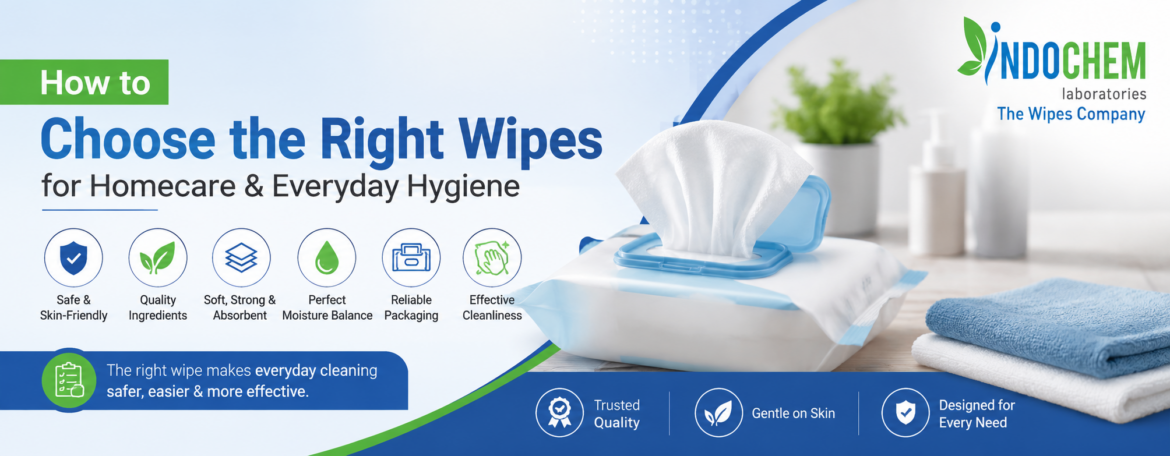
Choosing the right homecare wipes manufacturer and everyday hygiene depends on their intended use, skin sensitivity, material, moisture level, formulation, and packaging. Look for soft, durable, skin-friendly wipes that match the specific cleaning requirement. For sensitive or frequent use, prioritize gentle formulations, suitable pH balance, quality substrates, and reliable packaging.
Wipes have become an important part of modern homecare and personal hygiene. They offer a convenient way to clean skin, surfaces, equipment, and everyday items when traditional soap, water, or cloth-based cleaning is not practical.
However, not every wipe is designed for the same purpose. A wipe intended for household cleaning may contain ingredients unsuitable for direct skin contact, while a personal-care wipe may not provide the cleaning performance required for surfaces. Selecting the right product therefore requires understanding its material, formulation, intended application, and quality.

Whether you need wipes for personal hygiene, patient care, household cleaning, baby care, or general everyday use, choosing according to the application can improve convenience, comfort, and cleaning performance.
1. Start With the Intended Application
The first step is to determine exactly where and how the wipes will be used.
Different applications require different combinations of substrate, formulation, moisture level, and packaging.
Common homecare and hygiene applications include:
- Personal hygiene and freshening
- Hand and body cleaning
- Baby care
- Patient and elderly care
- Bedside hygiene
- Household surface cleaning
- Pet care
- Travel and outdoor hygiene
- General everyday cleaning
A wipe designed for skin should be formulated with skin contact in mind, while household or specialized cleaning wipes may require completely different formulations.
2. Consider the Wipe Material
The substrate is the actual fabric or nonwoven material that holds the formulation.
A good wipe should provide a suitable balance between softness, strength, absorbency, and cleaning ability.
Important characteristics include:
Softness
For wipes used directly on skin, softness is particularly important. A smooth, gentle substrate can make repeated use more comfortable.
Strength
The wipe should remain intact during handling and use. Weak materials can tear easily, especially when cleaning larger areas.
Absorbency
A suitable substrate should absorb and retain the formulation effectively while still releasing enough moisture during use.
Texture
Different textures can provide different cleaning experiences. Smooth materials may be preferable for delicate skin, while textured substrates can help with certain cleaning applications.
3. Check the Formulation
The liquid formulation is one of the most important aspects of a wipe.
Depending on its intended application, a formulation may contain water, moisturizers, cleansing agents, preservatives, botanical ingredients, or other functional components.
For skin-contact wipes, consider:
- Skin compatibility
- Mildness
- Appropriate pH
- Fragrance preferences
- Moisturizing properties
- Intended frequency of use
For surface-cleaning wipes, the formulation should instead be selected according to the type of surface and cleaning requirement.
It is important not to assume that a formulation suitable for one application is automatically appropriate for another.
4. Think About Skin Sensitivity
If the wipes will be used directly on skin, skin sensitivity should be an important consideration.
People with sensitive skin may prefer products with simpler and milder formulations. Strong fragrances or unnecessary ingredients may not be desirable for frequent personal use.
Before selecting a wipe, review its ingredient information and intended-use instructions. If the product is being considered for professional or sensitive applications, appropriate testing and regulatory requirements should also be considered.
5. Evaluate Moisture Level
A wipe that is too dry may not clean effectively, while excessive liquid can make handling inconvenient.
The ideal moisture level depends on the application.
For example:
- Personal hygiene wipes need sufficient moisture for comfortable cleaning.
- Surface wipes may require enough liquid to cover the intended cleaning area.
- Baby-care wipes generally need a gentle, comfortable formulation.
- Specialized wipes may require controlled liquid loading for consistent performance.
Consistent moisture distribution across the wipe is also important because it helps provide predictable performance.
6. Look at Wipe Size and Thickness
Size and thickness influence usability.
Larger wipes can be useful when cleaning bigger areas, while smaller wipes may be convenient for personal or on-the-go applications.
Thickness can also affect:
- Absorption
- Durability
- Cleaning performance
- Handling
- Liquid retention
The best specification depends on the intended application rather than simply choosing the thickest or largest wipe available.
7. Choose the Right Packaging
Packaging plays a major role in maintaining wipe quality.
Good packaging should help prevent moisture loss and protect the wipes from contamination during storage and regular use.
Common formats include:
- Resealable soft packs
- Flip-top packs
- Individual sachets
- Tub or canister packaging
- Bulk packaging for professional use
For frequently used household wipes, resealable packaging can be particularly convenient. Individually packaged wipes may be more suitable where portability or single-use handling is important.
8. Consider Shelf Life and Storage
Wipes contain a liquid formulation, so storage conditions can affect product quality.
Before purchasing or specifying wipes, check:
- Manufacturing date
- Expiry or recommended-use period
- Storage instructions
- Packaging integrity
- Exposure to heat or direct sunlight
Poor storage can potentially affect moisture, fragrance, appearance, and overall product performance.
9. Match the Wipe to the Surface
Not every cleaning wipe is appropriate for every surface.
Before using a wipe on delicate materials such as optical surfaces, electronics, coated finishes, or specialized equipment, verify that the formulation is compatible.
For household surfaces, always follow the product’s instructions and, when appropriate, test the product on a small inconspicuous area first.
This is especially important because certain formulations can affect coatings, finishes, or sensitive materials.
10. Consider Convenience and Portability
One of the biggest advantages of wipes is convenience.
For travel, commuting, outdoor activities, or emergency hygiene, compact packaging can make wipes easy to carry.
For household use, larger packs can provide better convenience and reduce the frequency of replacement.
The best format depends on how frequently the wipes will be used and where they will be stored.
11. Don’t Choose Only on Price
Price is important, but it should not be the only selection factor.
A lower-priced wipe may have differences in:
- Substrate quality
- Liquid loading
- Packaging
- Durability
- Formulation
- Size
- Consistency
For frequent or professional use, consistent quality can be more valuable than choosing the lowest initial price.
Instead, compare products based on cost per usable wipe, quality, intended application, packaging, and performance.
12. What Should Businesses Look for When Buying Wipes?
Businesses purchasing wipes in bulk should consider more than the basic product specification.
Important factors can include:
- Consistent substrate quality
- Formulation consistency
- Production capacity
- Packaging options
- Private-label or OEM capabilities
- Batch-to-batch consistency
- Quality-control procedures
- Documentation
- Customization options
- Minimum order quantities
- Delivery capability
For businesses developing their own wipe product, working with an experienced wipes manufacturer can help align the substrate, formulation, packaging, and intended application.
13. A Simple Checklist for Choosing Wipes
Before selecting a wipe, ask these questions:
- What will the wipe be used for?
- Is it intended for skin, surfaces, or a specialized application?
- Is the substrate soft and durable enough?
- Does it contain a formulation appropriate for the intended use?
- Is the moisture level suitable?
- Is the size practical?
- Does the packaging prevent drying?
- Is the product suitable for frequent use?
- Are storage and shelf-life requirements clear?
- Does the supplier provide consistent quality?
Answering these questions can make the selection process much easier.
Why Quality Matters in Homecare Wipes
Quality affects the entire user experience. A well-designed wipe should provide an appropriate combination of softness, strength, moisture retention, cleaning ability, and convenient packaging.
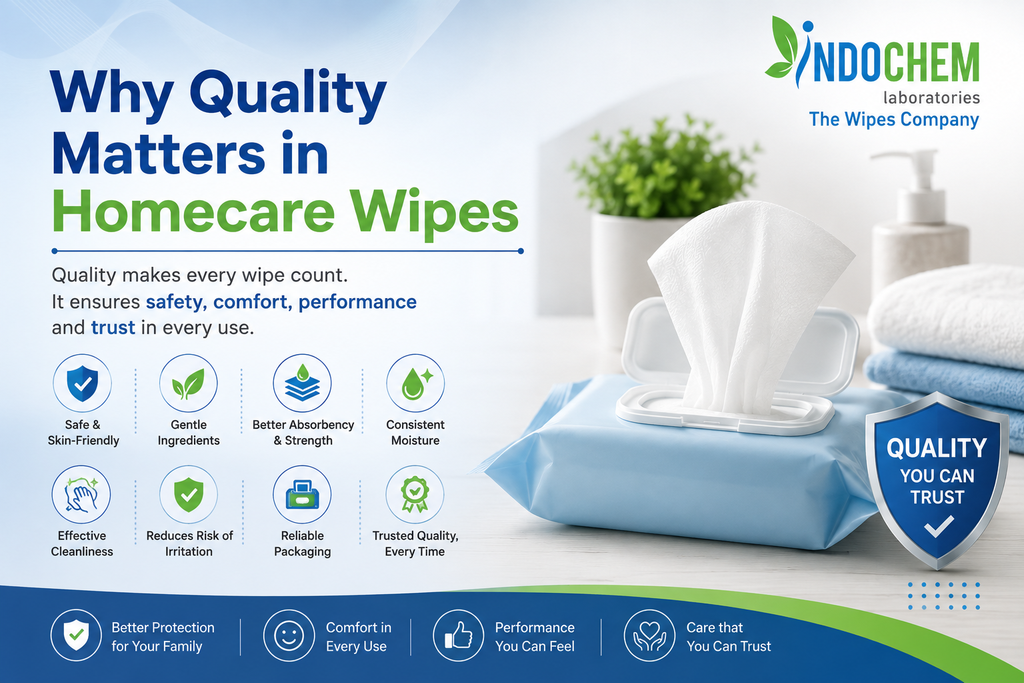
For manufacturers and brands, quality also influences customer satisfaction and repeat purchases.
The right wipe is therefore not necessarily the most expensive or the thickest product. It is the product that has been properly designed for its intended application.
ICLA: Wipe Solutions for Different Applications
ICLA develops wipe solutions for a range of hygiene, personal-care, homecare, and specialized applications. Depending on the requirement, businesses can explore different substrate, formulation, size, packaging, and customization possibilities.
For brands looking for reliable wipe solutions, selecting the right combination of material, formulation, and packaging is an important part of developing a successful product.
Looking for the right wipe solution for your application? Contact ICLA to discuss your product requirements, formulation, packaging, and bulk/OEM needs.
Frequently Asked Questions
1. How do I choose the best wipes for homecare?
Start by identifying the intended application. Then consider substrate softness, strength, absorbency, formulation, moisture level, size, packaging, and storage requirements.
2. Are all wipes suitable for skin?
No. Wipes are formulated for different purposes. A surface-cleaning wipe should not automatically be assumed suitable for direct skin contact. Always check the product’s intended use and instructions.
3. What makes a good homecare wipe?
A good homecare wipe should provide appropriate softness or cleaning performance, sufficient strength, consistent moisture, suitable formulation, convenient packaging, and reliable quality for its intended application.
4. Why is wipe material important?
The substrate affects softness, absorbency, strength, liquid retention, texture, and overall usability. The appropriate material depends on the application.
5. What should I consider when buying wipes in bulk?
Consider product specifications, consistency, formulation, packaging, quality controls, customization options, minimum order quantity, production capacity, and delivery requirements.
6. Can wipes be customized for different applications?
Yes. Depending on the manufacturer and product requirements, wipes may be developed with different substrates, liquid formulations, dimensions, packaging formats, and other specifications.
7. How should wipes be stored?
Follow the manufacturer’s storage instructions. Generally, wipes should be kept in their original packaging and protected from excessive heat, direct sunlight, and conditions that could cause premature drying or product deterioration.
8. Is a thicker wipe always better?
Not necessarily. Thickness is only one specification. The best wipe depends on the balance of substrate, absorbency, strength, moisture, formulation, and intended use.
9. What is the difference between personal-care and household wipes?
Personal-care wipes are designed with skin-contact requirements in mind, while household wipes are generally developed for cleaning surfaces or other household applications. Their formulations and substrates can therefore differ significantly.
10. Why is packaging important for wipes?
Packaging helps maintain moisture, protect the product during storage and transportation, and make the wipes easier to use. Resealable packaging can also help reduce drying after opening.
Choosing the right wipes for homecare and everyday hygiene requires more than simply selecting a convenient pack. The intended application, substrate, formulation, moisture level, size, packaging, storage requirements, and quality should all be evaluated together.
By matching the wipe specification to its actual purpose, consumers and businesses can achieve better convenience, usability, and overall performance. For brands and organizations purchasing wipes in larger quantities, selecting a capable manufacturing partner can also help ensure consistency and customization.