
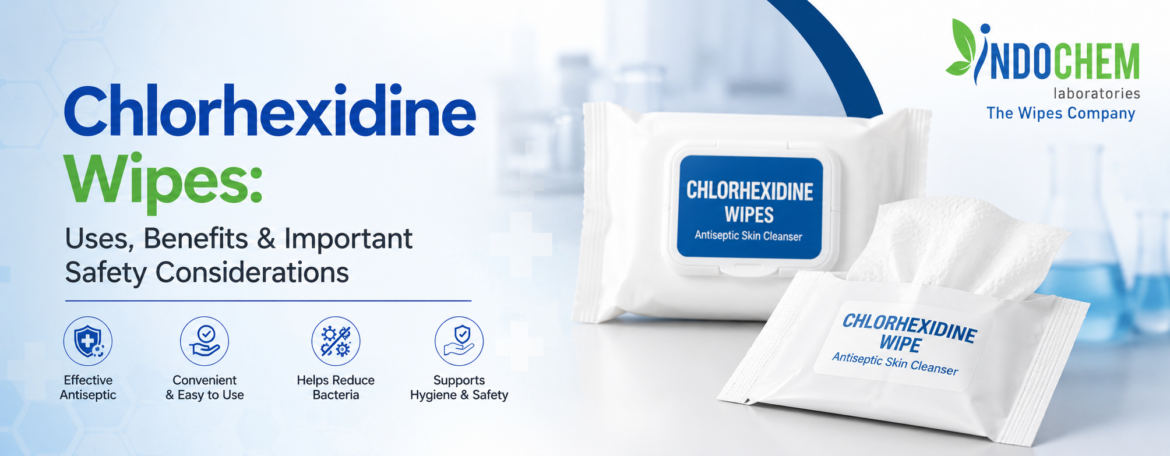
Chlorhexidine based wipes are antiseptic wipes designed to reduce bacteria on the skin when used according to their specific labeling. They are commonly used for skin cleansing and preparation in healthcare settings. Their benefits include convenient application, consistent coverage, and reduced contamination risk, but correct use is essential because chlorhexidine can cause skin irritation or, rarely, serious allergic reactions.
Maintaining effective skin hygiene is an important part of infection-control practices, particularly before certain medical procedures. Chlorhexidine is a widely used antiseptic ingredient formulated in different topical products, including solutions, washes, sponges, swabs, and wipes. Its primary purpose in topical applications is to reduce the number of bacteria present on the skin.
Chlorhexidine wipes offer a convenient format because the antiseptic formulation is incorporated into a pre-moistened cloth. This can help simplify application and provide a ready-to-use option where controlled skin preparation is required.
However, chlorhexidine wipes should not be considered ordinary cleansing wipes. Their intended use, active concentration, formulation, contact time, skin area, and safety instructions can vary between products. Therefore, users should always follow the specific product label and applicable healthcare protocols.
What Are Chlorhexidine Wipes?
Chlorhexidine wipes are pre-moistened wipes containing a chlorhexidine-based antiseptic formulation intended for topical skin use.
Chlorhexidine works primarily by reducing microorganisms on the skin. Depending on the formulation and intended application, chlorhexidine products can be used for skin cleansing or preparation before certain procedures.
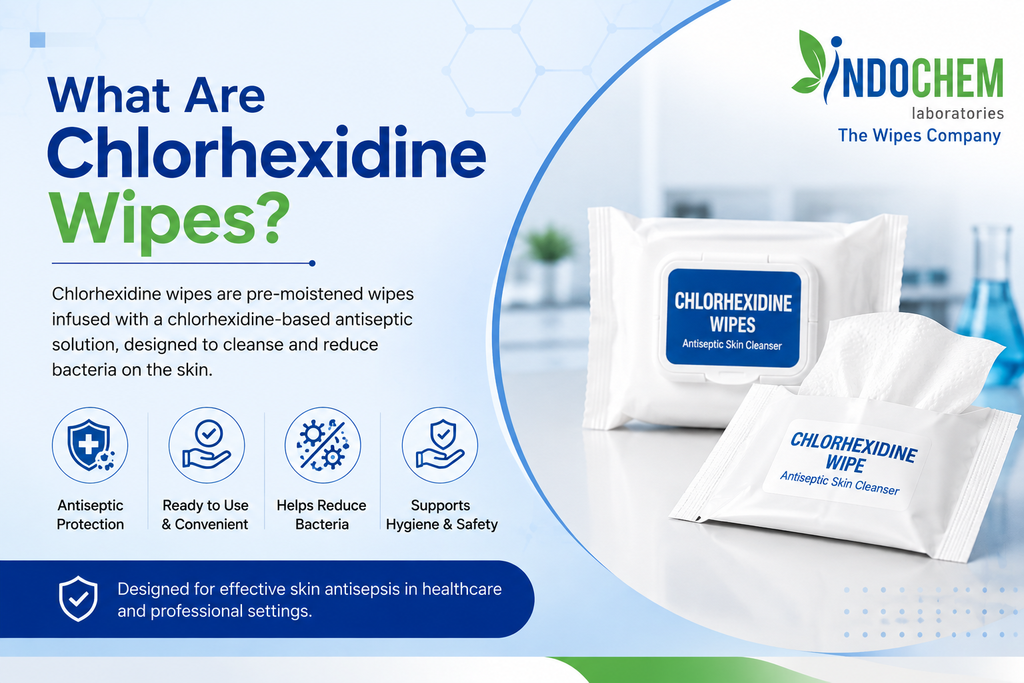
The wipe format provides several practical advantages:
- Ready-to-use application
- Convenient handling
- Controlled delivery of the formulation
- Reduced need for separate cloths or applicators
- Easy packaging for individual or procedure-specific use
- Convenient storage and transportation
- Consistent application when used according to instructions
It is important to distinguish between chlorhexidine wipes intended for human skin and wipes intended for other purposes. The regulatory classification and appropriate use of a wipe depend on its intended purpose. FDA notes that wipes intended for therapeutic purposes, such as killing germs on skin, are regulated differently from ordinary cosmetic cleansing wipes.
How Does Chlorhexidine Work?
Chlorhexidine is an antimicrobial agent that reduces bacteria on the skin. Its effectiveness comes from its interaction with microbial cell membranes, which can interfere with cellular integrity and contribute to microbial destruction.
The exact performance of a chlorhexidine wipe depends on several factors, including:
- Chlorhexidine concentration
- Formulation ingredients
- Wipe substrate
- Amount of formulation delivered
- Coverage of the intended area
- Application technique
- Required contact or drying time
- Specific product instructions
Therefore, it is not appropriate to assume that every chlorhexidine wipe performs identically.
Common Uses of Chlorhexidine Wipes
1. Pre-Procedure Skin Preparation
One of the important applications of topical chlorhexidine products is cleansing and preparing skin before certain medical procedures. FDA describes chlorhexidine gluconate products as being used to clean and prepare skin before surgery and injections to help reduce bacteria that could potentially contribute to skin infections.
The specific preparation method should always follow the healthcare facility’s protocol and the product’s approved labeling.
2. Healthcare Hygiene Applications
Healthcare environments require controlled approaches to skin antisepsis because patients may undergo procedures involving injections, catheter placement, surgery, or other interventions.
Chlorhexidine-based products may form part of infection-prevention protocols when appropriate for the patient and procedure.
For example, CDC recommendations discuss chlorhexidine-impregnated dressings as part of strategies for preventing certain catheter-related bloodstream infections in specified patient populations.
3. Convenient Antiseptic Application
A pre-moistened wipe can be particularly practical when healthcare professionals need a ready-to-use format rather than measuring or dispensing a liquid solution.
This can simplify preparation and help reduce unnecessary handling of open containers.
4. Procedure-Specific Skin Cleansing
Depending on the product’s labeling and healthcare protocol, chlorhexidine wipes may be selected for specific skin cleansing or preparation procedures.
However, the intended application should never be inferred solely from the presence of chlorhexidine. The product label and professional instructions should determine where and how the wipe is used.
Key Benefits of Chlorhexidine Wipes
Ready-to-Use Format
One of the biggest advantages is convenience. The wipe is already impregnated with the required formulation, eliminating the need to separately dispense liquid onto a cloth.
Consistent Application
A properly manufactured wipe can provide a standardized format for applying the formulation across the intended area. Actual coverage still depends on wipe size, formulation volume, application technique, and product design.
Convenient Packaging
Individually packaged or procedure-specific wipes can be easier to store, transport, and use in clinical environments.
Reduced Handling
A ready-to-use wipe can reduce the number of steps involved in preparing an antiseptic application, potentially making the process more convenient for healthcare professionals.
Suitable for Structured Hygiene Protocols
When appropriately formulated and labeled, chlorhexidine wipes can support standardized skin-preparation procedures.
Chlorhexidine Wipes vs. Ordinary Cleansing Wipes
The two should not be treated as interchangeable.
Ordinary cleansing wipes are generally designed for cleansing, moisturizing, or personal-care purposes. Chlorhexidine wipes intended for therapeutic skin antisepsis contain an antimicrobial active ingredient and are subject to different regulatory considerations.
The key differences can include:
| Feature | Chlorhexidine Wipes | Ordinary Cleansing Wipes |
|---|---|---|
| Primary purpose | Antiseptic skin preparation/use as labeled | General cleansing |
| Active antimicrobial ingredient | Chlorhexidine formulation | May not contain an antimicrobial active |
| Intended application | Product-specific | Personal-care or cleansing |
| Safety instructions | Often more specific | Usually general cleansing instructions |
| Professional use | Common in appropriate healthcare applications | Primarily personal-care applications |
The exact characteristics depend on the individual product.
Important Safety Considerations
Chlorhexidine is useful, but it must be handled carefully.
1. Allergic Reactions
One of the most important safety considerations is chlorhexidine hypersensitivity. FDA has warned that rare but serious allergic reactions can occur with chlorhexidine gluconate-containing products. Symptoms can include hives, facial swelling, difficulty breathing, wheezing, severe rash, and shock.
Anyone with a known chlorhexidine allergy should avoid products containing chlorhexidine unless specifically directed otherwise by an appropriate healthcare professional.
2. Skin Irritation
Some people may develop redness, itching, irritation, or other skin reactions. FDA documentation has identified allergic contact dermatitis and other hypersensitivity reactions associated with chlorhexidine-containing products.
If significant irritation or an allergic reaction develops, use should be stopped and medical advice sought.
3. Avoid Eyes, Ears and Mouth
Chlorhexidine topical products are not intended for indiscriminate application to sensitive areas. MedlinePlus advises keeping chlorhexidine topical products away from the eyes, ears, and mouth.
Some product labels contain particularly strong warnings about accidental exposure to these areas, so the individual product instructions should always be followed.
4. Infants and Young Children
Extra caution may be necessary when chlorhexidine products are considered for infants. MedlinePlus notes that chlorhexidine products should be used carefully in premature infants and infants under 2 years of age because irritation or burns may occur.
CDC also identifies serious skin-reaction concerns with certain chlorhexidine-impregnated products in premature neonates.
5. Follow the Product Label
More antiseptic does not automatically mean better results. Using a product more frequently, applying excessive amounts, or using it on areas not specified by the manufacturer can increase the possibility of unwanted effects.
Always follow:
- Intended use
- Application instructions
- Contact/drying instructions
- Contraindications
- Age restrictions
- Storage requirements
- Disposal instructions
What Should Manufacturers Consider When Developing Chlorhexidine Wipes?
For healthcare-oriented products, formulation and manufacturing quality are particularly important.
Important considerations can include:
Wipe Substrate
The substrate should be compatible with the formulation and appropriate for the intended application. Absorbency, softness, strength, linting, and liquid retention can influence user experience and product performance.
Formulation Compatibility
The wipe material, active ingredient, preservatives, packaging, and other formulation components should be evaluated together. Compatibility problems can affect stability or product quality over time.
Packaging Integrity
Packaging should protect the wipe from contamination, leakage, drying, and unnecessary exposure to environmental conditions.
Consistent Liquid Loading
Uniform impregnation is important for reproducible product performance. Variations in formulation loading can potentially affect how the product performs during application.
Stability
Manufacturers should evaluate how the formulation and substrate behave throughout the intended shelf life under appropriate storage conditions.
Regulatory Requirements
The regulatory status of a chlorhexidine wipe depends on its intended use, claims, formulation, market, and applicable regulations. Manufacturers should establish appropriate regulatory and quality requirements before commercialization rather than treating all wipes as the same product category.
How Should Chlorhexidine Wipes Be Stored?
Storage requirements depend on the individual product, but general wipe-handling principles include keeping packaging properly closed and protecting the product from unsuitable environmental conditions.
FDA notes that improper storage can cause wipes to dry out or can affect ingredients; warm conditions may also encourage microbial growth in certain wipe products.
For healthcare products, always follow the manufacturer’s specified storage temperature, shelf life, packaging instructions, and handling requirements.
Chlorhexidine Wipes and Infection Control
Chlorhexidine can play an important role in infection-control strategies, but it should be viewed as one component of an overall protocol, not as a replacement for proper hygiene practices.
Effective infection prevention may also involve:
- Appropriate hand hygiene
- Correct skin preparation technique
- Sterile or appropriately controlled equipment
- Proper aseptic technique
- Correct PPE where required
- Appropriate environmental cleaning
- Following institutional infection-control protocols
CDC guidance demonstrates that chlorhexidine-containing products can have specific roles within broader infection-prevention strategies, but recommendations depend on the particular clinical situation and patient population.
How to Choose an Appropriate Chlorhexidine Wipe
When evaluating a chlorhexidine wipe, consider:
- Intended application – Is it appropriate for the specific procedure or skin-preparation requirement?
- Active formulation – Check the stated chlorhexidine type and concentration.
- Wipe size – The wipe should provide suitable coverage for the intended application.
- Packaging – Look for packaging designed to maintain product integrity.
- Instructions – Verify application, contact, drying, and disposal directions.
- Safety information – Review warnings, contraindications, and allergy information.
- Quality controls – For professional procurement, evaluate manufacturing standards and quality documentation.
- Regulatory compliance – Ensure the product meets requirements applicable to its intended market and claims.
Chlorhexidine wipes provide a convenient, ready-to-use format for specific antiseptic skin applications. Their major advantages include convenience, controlled formulation delivery, easy handling, and potential integration into structured healthcare hygiene protocols.
At the same time, chlorhexidine should be used responsibly. Skin irritation and rare but serious allergic reactions are important safety considerations, and the product should never be used outside its intended application. FDA specifically warns about serious hypersensitivity reactions, while healthcare guidance emphasizes using chlorhexidine products according to appropriate clinical recommendations.
For healthcare organizations and product buyers, the focus should therefore be on appropriate formulation, reliable wipe construction, packaging integrity, quality control, clear labeling, and intended-use compliance rather than simply choosing a product because it contains chlorhexidine.
Frequently Asked Questions
1. What are chlorhexidine wipes used for?
Chlorhexidine wipes are used for specific topical skin-cleansing or antiseptic applications according to their product labeling. Chlorhexidine topical products are commonly used to reduce bacteria on the skin and may be used for skin preparation before certain procedures.
2. Are chlorhexidine wipes antibacterial?
Yes. Chlorhexidine is an antimicrobial agent that reduces bacteria on the skin. However, the precise antimicrobial claims and intended uses depend on the individual product and its labeling.
3. Can chlorhexidine wipes cause skin irritation?
Yes. Irritation, redness, itching, dermatitis, or other skin reactions can occur. If significant irritation or sensitization develops, discontinue use and seek appropriate medical advice.
4. Can someone be allergic to chlorhexidine?
Yes. Chlorhexidine can cause allergic reactions, including rare but serious reactions. People with a known chlorhexidine allergy should avoid chlorhexidine-containing products unless directed otherwise by a healthcare professional.
5. Can chlorhexidine wipes be used around the eyes?
Chlorhexidine topical products should not be allowed to enter the eyes. Specific product instructions should always be followed because accidental exposure can cause serious injury with some formulations.
6. Are chlorhexidine wipes suitable for babies?
Not necessarily. Certain chlorhexidine products require particular caution in premature infants and very young infants because of the risk of irritation or chemical burns. Use should be based on the specific product labeling and appropriate professional guidance.
7. Are chlorhexidine wipes the same as regular wet wipes?
No. Regular wet wipes may be designed for general cleansing or personal care, whereas chlorhexidine wipes intended for therapeutic skin antisepsis contain an antimicrobial active ingredient and have different intended uses and regulatory considerations.
8. How should chlorhexidine wipes be stored?
Follow the manufacturer’s storage instructions. In general, wipes should remain properly sealed and protected from unsuitable temperatures and conditions that could cause drying or affect formulation quality.
9. What should I do if I experience an allergic reaction?
Stop using the product and seek medical attention. If symptoms such as difficulty breathing, wheezing, facial swelling, widespread hives, or signs of shock occur, immediate emergency medical care is required.
10. Are chlorhexidine wipes suitable for every medical procedure?
No. Suitability depends on the formulation, concentration, intended use, patient characteristics, procedure, and product labeling. Healthcare professionals should follow applicable clinical protocols and manufacturer instructions.