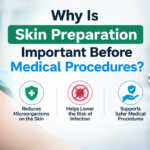
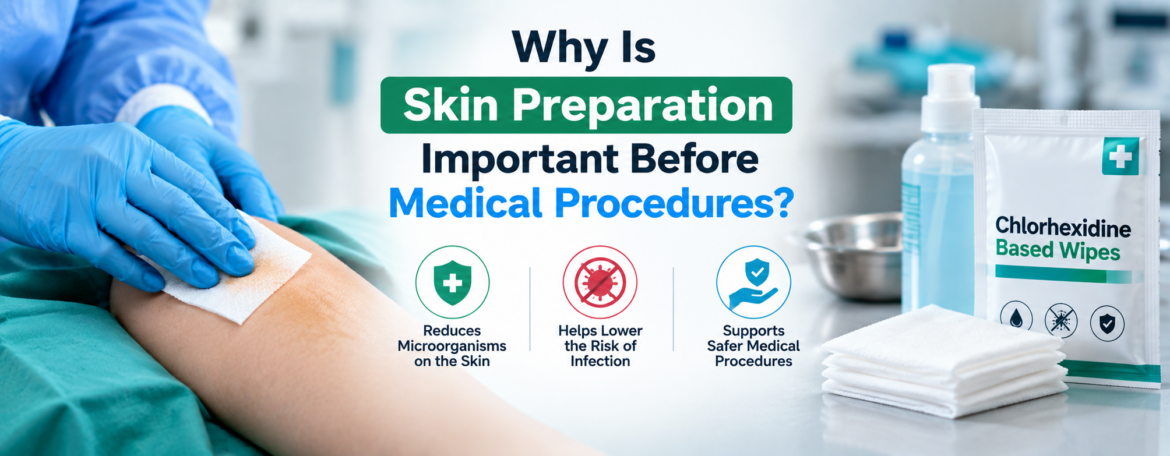
Skin preparation is important before medical procedures because it removes dirt, reduces microorganisms on the skin, and helps lower the risk of infection when the skin barrier is broken. Depending on the procedure, healthcare professionals may use antiseptic solutions, Chlorhexidine Based Wipes, or other approved skin-preparation products according to clinical requirements.
Before many medical procedures, healthcare professionals take specific steps to prepare the patient’s skin. Although this may seem like a simple cleaning process, proper skin preparation is an important part of infection prevention.
The skin naturally contains microorganisms, including bacteria and other microbes. Most are harmless when the skin remains intact. However, procedures such as surgery, injections, catheter insertion, biopsies, and other invasive treatments can break the skin barrier and potentially allow microorganisms to enter deeper tissues.
Proper skin preparation helps reduce the microbial load at the procedure site and supports a safer clinical environment. The World Health Organization (WHO) identifies surgical-site skin preparation as an important component of preventing surgical site infections and recommends appropriate antiseptic preparation before surgical procedures.
What Is Skin Preparation?
Skin preparation refers to cleaning and treating the skin at or around the area where a medical procedure will take place.
Depending on the procedure, healthcare professionals may use:
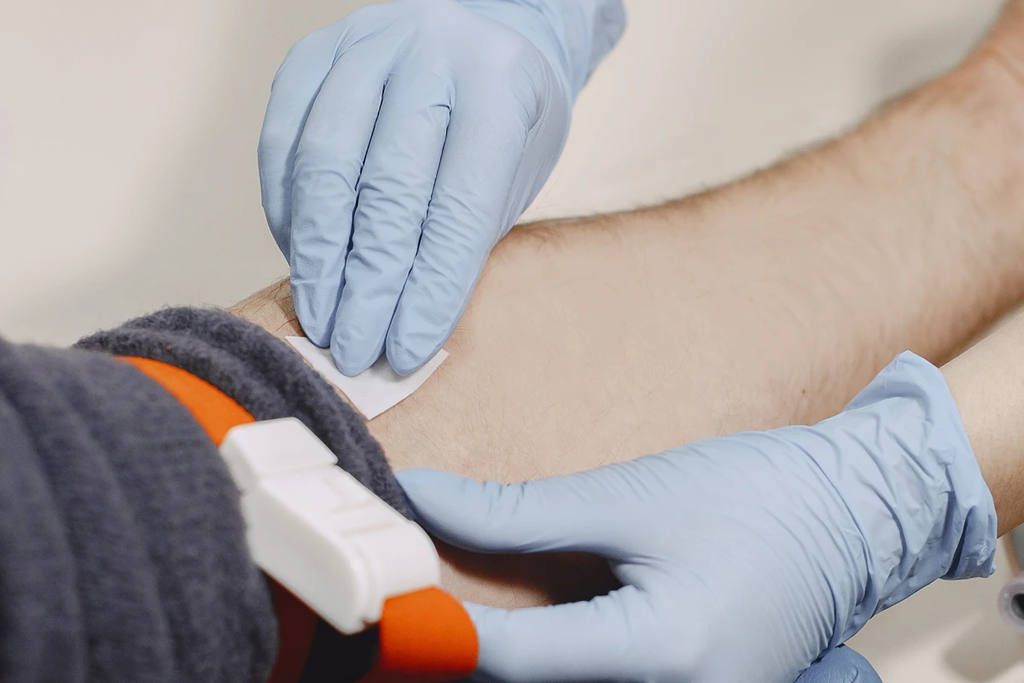
- Antiseptic solutions
- Alcohol-based preparations
- Chlorhexidine-based products
- Povidone-iodine preparations
- Sterile gauze or applicators
- Pre-procedure cleansing products
- Antiseptic wipes where appropriate
The choice depends on the procedure, patient factors, the location of the skin, and the healthcare facility’s infection-control protocol.
For certain surgical procedures, WHO recommends alcohol-based antiseptic solutions containing chlorhexidine gluconate when appropriate.
Why Is Skin Preparation Important?
1. Helps Reduce Microorganisms on the Skin
Human skin naturally carries microorganisms. While these organisms are generally harmless on intact skin, they can become a concern when a procedure creates an opening in the skin.
Antiseptic skin preparation helps reduce the number of microorganisms present at the procedure site before the healthcare professional begins.
This is particularly important for procedures where the skin barrier is intentionally broken.
2. Helps Reduce the Risk of Infection
One of the primary purposes of skin antisepsis is to help reduce the possibility of microorganisms entering the body during an invasive procedure.
Surgical site infections (SSIs), for example, occur in the area where surgery takes place and can involve the skin, tissues, organs, or implanted materials.
Appropriate skin preparation is therefore one component of a broader infection-prevention strategy.
3. Supports Safer Surgical Procedures
During surgery, an incision creates a pathway through the skin. Preparing the surrounding area before the incision helps reduce the microbial burden on the skin.
WHO recommends appropriate surgical-site skin preparation as part of its broader recommendations for preventing surgical site infections.
However, skin preparation is only one part of infection prevention. Hand hygiene, sterile instruments, appropriate surgical technique, environmental controls, and postoperative wound care also play important roles.
4. Helps Prepare the Skin Before Injections and Catheter Procedures
Skin preparation is not limited to major surgery.
Healthcare professionals may also prepare the skin before:
- Intravenous catheter insertion
- Blood collection
- Injections
- Central line placement
- Peripheral arterial catheter insertion
- Minor procedures
- Certain diagnostic procedures
For example, CDC guidance recommends antiseptic skin preparation before peripheral venous catheter insertion and recommends chlorhexidine preparation with alcohol for certain central venous and peripheral arterial catheter procedures when appropriate.
5. Helps Maintain Infection-Control Standards
Healthcare facilities follow infection-prevention protocols to reduce avoidable contamination during medical procedures.
Proper skin preparation works alongside:
- Hand hygiene
- Sterile or aseptic technique
- Clean and sterile equipment
- Appropriate personal protective equipment
- Proper wound management
- Environmental cleaning
Following these measures together provides a more comprehensive approach to infection prevention.
What Products Are Used for Skin Preparation?
The appropriate product depends on the medical procedure and the patient’s circumstances.
Alcohol-Based Antiseptics
Alcohol is commonly used because it has rapid antimicrobial activity. CDC notes that alcohol is highly bactericidal, although it does not provide the same persistent activity as some antiseptic combinations.
For this reason, alcohol may be combined with another antiseptic, such as chlorhexidine or an iodophor, depending on the clinical application.
Chlorhexidine-Based Products
Chlorhexidine gluconate (CHG) is widely used for skin antisepsis in healthcare settings.
For example, Chlorhexidine Based Wipes may be used in appropriate healthcare applications where a wipe format is suitable for the required skin-preparation protocol.
The specific concentration, formulation, application method, and intended use should always follow the product instructions and healthcare facility protocol.
Povidone-Iodine
Povidone-iodine is another antiseptic used for skin preparation in certain clinical situations.
The choice between antiseptic products depends on factors such as the procedure, body site, patient characteristics, allergies or sensitivities, and applicable clinical guidance.
How Is Skin Prepared Before a Medical Procedure?
Although exact procedures vary, skin preparation commonly involves several basic steps.
Step 1: Identify the Procedure Site
The healthcare professional identifies the correct area where the procedure will take place.
Step 2: Clean the Area
Visible dirt, debris, or contamination may need to be removed before antiseptic preparation.
WHO specifically notes that the skin around the incision should be washed and cleaned before antiseptic skin preparation.
Step 3: Apply the Appropriate Antiseptic
An appropriate antiseptic is applied according to the procedure and manufacturer’s instructions.
Application technique can vary depending on the product and procedure.
Step 4: Allow the Antiseptic to Work and Dry
Some antiseptic products require sufficient contact time and drying before the procedure begins.
For example, CDC recommends allowing antiseptics to dry according to the manufacturer’s recommendations before catheter placement.
Step 5: Begin the Procedure Using Appropriate Technique
Once the preparation has been completed, the healthcare professional proceeds using the required aseptic or sterile technique.
Is Hair Removal Part of Skin Preparation?
Hair removal is not automatically necessary before every procedure.
WHO states that hair should generally not be removed unless necessary. If removal is required, clipping is preferred over shaving because shaving can cause microscopic skin trauma that may increase infection risk.
Therefore, patients should not routinely shave the area before surgery unless specifically instructed by their healthcare provider.
What Factors Can Affect Skin Preparation?
Several factors can influence which skin-preparation method is appropriate.
Procedure Type
A major surgical procedure may require a different preparation protocol than a routine injection or catheter insertion.
Body Location
The skin on different parts of the body can have different requirements. Some antiseptic products may not be appropriate for sensitive areas, mucous membranes, eyes, or other specific sites.
Patient Allergies or Sensitivities
Healthcare professionals should consider known allergies and sensitivities when selecting an antiseptic.
Chlorhexidine, for example, can cause allergic reactions in some individuals. WHO notes that hypersensitivity and allergic reactions are considerations with chlorhexidine-containing products.
Age and Skin Condition
Very young patients, particularly certain neonatal populations, may require special consideration. CDC notes that the safety and efficacy of chlorhexidine in infants younger than two months remains an unresolved issue in some catheter-related applications.
Patients with damaged, irritated, or compromised skin may also require an adjusted approach.
Benefits of Proper Skin Preparation
Appropriate skin preparation can contribute to several important healthcare goals:
- Reducing microorganisms at the procedure site
- Supporting infection prevention
- Preparing the skin before an incision or insertion
- Supporting aseptic clinical practice
- Improving procedural safety
- Helping healthcare facilities follow infection-control protocols
It is important to remember that skin preparation alone cannot eliminate all infection risks. Infection prevention requires multiple measures working together.
What Should Patients Know Before a Procedure?
Patients can also play an important role in safe preparation.
Before a procedure, patients should:
- Inform their healthcare provider about known allergies.
- Tell the provider about previous reactions to antiseptics.
- Follow instructions regarding bathing or showering.
- Avoid shaving the procedure area unless instructed.
- Tell the healthcare team about existing skin irritation or wounds.
- Follow all pre-procedure instructions provided by the medical facility.
CDC also recommends that patients discuss relevant medical conditions and treatment considerations with their healthcare provider before surgery.
Why Choosing the Right Skin Preparation Product Matters
Not every antiseptic product is suitable for every medical procedure. A product should be selected based on its intended use, formulation, concentration, application method, body site, and clinical requirements.
For healthcare providers and medical facilities, product quality and appropriate usage instructions are important considerations when selecting skin-preparation products.
The goal is not simply to clean the skin but to use an appropriate, evidence-based antiseptic process that fits the specific clinical situation.
Frequently Asked Questions
1. Why is skin preparation necessary before surgery?
Skin preparation helps reduce microorganisms on the skin before an incision is made. This supports infection-prevention efforts and is an important component of surgical site infection prevention.
2. Does skin preparation completely prevent infection?
No. Skin preparation can reduce microbial contamination, but it cannot completely eliminate the possibility of infection. Other measures, including hand hygiene, sterile technique, appropriate equipment processing, and postoperative wound care, are also important.
3. Can I shave the surgical area before surgery?
Patients generally should not shave the surgical area unless instructed by their healthcare provider. If hair removal is necessary, clipping is generally preferred over shaving because shaving can cause skin trauma.
4. Are chlorhexidine products used for skin preparation?
Yes. Chlorhexidine gluconate is widely used for skin antisepsis, including in certain surgical and catheter-related applications. However, the appropriate product depends on the procedure and patient.
5. Can antiseptic products cause skin reactions?
Yes. Some people can experience irritation, sensitivity, or allergic reactions to antiseptic products. Patients should inform healthcare professionals about known allergies or previous reactions before a procedure.
6. How long should an antiseptic remain on the skin?
The required application and drying time depends on the specific product and procedure. Healthcare professionals should follow the manufacturer’s instructions and applicable clinical protocols.
7. Are skin-preparation wipes suitable for medical procedures?
Some antiseptic wipes are designed for specific healthcare applications, but suitability depends on the product, procedure, body site, and clinical protocol. Chlorhexidine Based Wipes should be used only according to their labeled intended use and healthcare guidance.
Proper skin preparation is a fundamental part of infection prevention before many medical procedures. By appropriately cleaning the skin and using a suitable antiseptic, healthcare professionals can help reduce microorganisms at the procedure site and support safer clinical care. WHO and CDC guidance emphasize that skin antisepsis should be selected and performed according to the procedure and patient circumstances.
For healthcare applications where an appropriate wipe format is indicated, Chlorhexidine Based Wipes can be one option for skin antisepsis when used according to their intended purpose and clinical protocol. Ultimately, effective skin preparation works best as part of a complete infection-prevention strategy that includes hand hygiene, aseptic technique, appropriate equipment, and proper wound care.