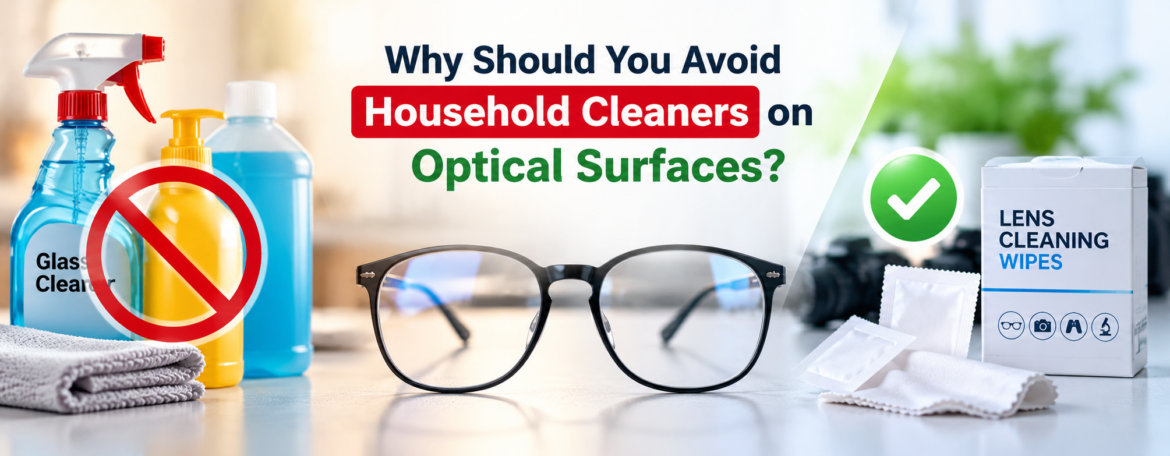
Household cleaners should generally be avoided on optical surfaces because their chemicals, fragrances, solvents, abrasives, or unsuitable pH can leave residues or affect sensitive lens coatings. Optical surfaces need gentle, purpose-designed cleaning. A reliable Lens Cleaning Wipes Manufacturer develops suitable wipes and formulations to remove fingerprints, oil and dust without unnecessarily stressing delicate surfaces.
Optical surfaces are designed to provide clear, accurate and distortion-free viewing. They can be found on eyeglasses, sunglasses, camera lenses, binoculars, microscopes, optical instruments and other precision devices. Although these surfaces may appear smooth and durable, many contain specialized coatings that require careful cleaning.
Modern optical lenses may include anti-reflective, scratch-resistant, water-repellent, oleophobic or other functional coatings. These layers can improve visual performance and make lenses easier to maintain, but inappropriate cleaning products or techniques can gradually affect the surface.
One common mistake is reaching for a household glass cleaner, multipurpose cleaner, disinfectant or other readily available cleaning product. A product that works effectively on windows, countertops or other household materials is not necessarily appropriate for precision optical surfaces.
ZEISS specifically advises against using household cleaners on spectacle lenses and recommends appropriate lens-cleaning products or water with a pH-neutral cleaning agent and a suitable cloth instead.
1. Optical Surfaces Are More Sensitive Than Ordinary Glass
A household window and an optical lens may both look like glass, but their intended functions are very different.
Optical components are manufactured to maintain precise light transmission and image quality. Even small amounts of residue, microscopic scratches or coating damage can affect the viewing experience.
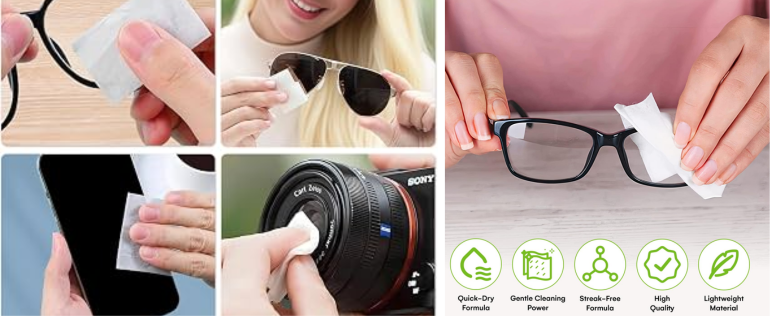
For example, camera lenses and microscope optics may contain multilayer coatings that influence reflection and image transmission. ZEISS instructions for certain surgical microscope optical components state that chemical agents should not be used on the optical surfaces and recommend removing dust with suitable non-abrasive methods.
Therefore, cleaning should be based on the manufacturer’s instructions for the specific optical component rather than on assumptions about ordinary glass.
2. Household Cleaners May Contain Unsuitable Chemicals
Many household cleaning products are formulated for hard surfaces rather than precision optics. Depending on the product, they may contain solvents, strong surfactants, fragrances, additives or other ingredients that are not intended for coated lenses.
The important issue is not simply whether a cleaner removes dirt. A cleaning product must also be compatible with the lens material and its surface treatment.
This is particularly important for coated spectacle lenses. ZEISS advises using its designated cleaning products or, alternatively, water with a pH-neutral cleaning agent and an appropriate cloth, while specifically warning against household cleaners.
3. Lens Coatings Need Special Protection
Modern lenses can contain several functional layers.
Common examples include:
- Anti-reflective coatings
- Scratch-resistant coatings
- Water-repellent coatings
- Oil-resistant coatings
- Anti-static coatings
- Easy-clean surface treatments
- UV-protection layers
These coatings can improve lens performance and make routine cleaning easier. However, they should not be treated as completely immune to chemical or mechanical damage.
ZEISS explains that modern coatings can provide benefits such as improved resistance to dirt and easier cleaning, while still recommending appropriate cleaning methods for coated lenses.
Using an unsuitable cleaner repeatedly may therefore create unnecessary risk to the surface treatment.
4. Residue Can Reduce Optical Clarity
Some household cleaning products can leave behind a film or residue. Even when the surface initially appears clean, residue may become visible as streaks, haze or smudges when light hits the surface at different angles.
For optical applications, this can be especially inconvenient.
A camera lens, for example, must transmit light accurately. Residue or smearing can contribute to unwanted reflections, glare or reduced image clarity. Similarly, residue on eyeglass lenses can make vision appear less clear.
Purpose-designed lens cleaning products are formulated to remove common contaminants such as fingerprints, oil, dust and smudges while minimizing unwanted residue. ZEISS describes its lens wipes as being designed specifically for optical surfaces and formulated to leave lenses streak-free.
5. Abrasive Particles Can Cause Microscopic Scratches
Chemical compatibility is only one part of safe optical cleaning. Mechanical action is equally important.
Dust and dirt particles can become trapped between the lens and a cloth. Rubbing aggressively can then move those particles across the surface and create microscopic scratches.
These scratches may accumulate over time and affect optical clarity.
ZEISS recommends removing coarse dirt before cleaning and warns against using clothing or unsuitable materials because tiny particles can scratch lenses.
This is why a proper cleaning process should combine an appropriate cleaning formulation with a soft, suitable wipe or microfiber material.
6. Strong Cleaning Does Not Mean Better Cleaning
A common misconception is that the stronger a cleaner is, the cleaner the lens will become.
For optical surfaces, this approach can be counterproductive.
The goal is not to use the strongest possible chemical. The goal is to remove contaminants effectively while maintaining compatibility with the optical material and coating.
A properly formulated lens-cleaning product should address the contaminants normally found on the surface without introducing unnecessary chemical stress.
This is one reason professional optical-care products are different from general-purpose household cleaners.
7. Do Not Assume Alcohol Is Always Unsafe—or Always Safe
Alcohol is an important example of why cleaning instructions should be followed carefully.
Some specialized optical cleaning products use alcohol-based formulations. ZEISS, for example, lists alcohol-based lens wipes among its professional lens-cleaning products.
However, that does not mean that any alcohol-containing household product is automatically suitable for every optical surface.
The concentration, formulation, additives, substrate, coating and manufacturer’s instructions all matter.
For cameras, electronic displays, laboratory optics and specialized equipment, users should follow the specific manufacturer’s cleaning instructions rather than applying a generic household product.
8. The Right Wipe Matters Too
Even an appropriate cleaning solution can be undermined by an unsuitable wiping material.
Paper towels, tissues, clothing and other rough materials can contain fibers or trapped particles that may create scratches when rubbed against optical surfaces.
A professional Lens Cleaning Wipes Manufacturer focuses not only on the cleaning liquid but also on substrate selection, absorbency, softness, wetness level, packaging and wiping performance.
Individually packaged, pre-moistened wipes can also help provide consistent cleaning conditions and reduce the possibility of transferring contaminants from a previously used cloth. ZEISS recommends single-use lens wipes for individual cleaning applications rather than reusing wipes that may retain abrasive particles.
9. How to Clean Optical Surfaces More Safely
A basic cleaning process can include the following steps, subject to the equipment manufacturer’s instructions:
Step 1: Check the manufacturer’s instructions
Before cleaning a specialized optical component, identify the recommended cleaning method. Different lenses and coatings may have different requirements.
Step 2: Remove loose dust
Gently remove loose particles before rubbing the surface. This helps reduce the possibility of dragging abrasive particles across the lens.
Step 3: Use an appropriate optical cleaning product
Use a product specifically intended for the optical surface whenever possible.
Step 4: Use gentle movements
Avoid excessive pressure. Let the cleaning material and appropriate formulation do the work.
Step 5: Avoid repeated dry rubbing
ZEISS notes that dry wiping can damage lens surfaces and recommends using the appropriate cleaning material while moist.
Step 6: Inspect the surface
After cleaning, check the lens under suitable lighting for remaining streaks, particles or residue.
10. Household Products to Treat With Caution
Unless specifically approved by the optical equipment manufacturer, avoid casually using products such as:
- General-purpose household cleaners
- Window or glass cleaners
- Abrasive cleaners
- Strong degreasers
- Products with unknown chemical formulations
- Household disinfectants not approved for the particular lens
- Paper towels or rough tissues
- Clothing or shirt sleeves
- Dry materials containing trapped dust
The important principle is simple: a cleaner designed for one surface should not automatically be assumed safe for another.
11. Why Professional Lens Wipes Are Useful
Purpose-designed lens wipes offer several practical advantages for routine optical cleaning.
They can provide:
- Consistent cleaning formulation
- Controlled moisture
- Soft wiping material
- Convenient single-use packaging
- Easy portability
- Reduced risk of transferring dirt from previously used cloths
- Quick removal of fingerprints and smudges
- Convenient cleaning for everyday optical surfaces
ZEISS describes its lens wipes as being designed for glass and plastic lenses, including coated precision lenses, and reports that its wipes are intended to provide effective cleaning without damaging the lens surface.
For manufacturers, retailers and private-label businesses, product development should therefore consider both the formulation and the physical characteristics of the wipe.
12. Choosing a Lens Cleaning Wipes Manufacturer
Businesses sourcing optical cleaning wipes should evaluate more than price.
Important considerations include:
- Compatibility with coated optical surfaces
- Wipe material and softness
- Cleaning formulation
- Moisture consistency
- Residue performance
- Packaging quality
- Shelf-life stability
- Manufacturing quality controls
- Customization capabilities
- Private-label and OEM support
- Bulk production capacity
- Product testing and documentation
A manufacturer should also be able to clearly communicate how the wipe is intended to be used and what types of surfaces have been evaluated.
Optical surfaces deserve more careful treatment than ordinary household surfaces. Household cleaners may contain ingredients or combinations that are unsuitable for sensitive lens materials and coatings, while rough wiping materials can introduce microscopic scratches. The safer approach is to follow the optical equipment manufacturer’s instructions and use an appropriate cleaning product. Working with a reliable Lens Cleaning Wipes Manufacturer can help businesses source purpose-designed wipes with suitable materials, formulations and packaging for optical-care applications.
FAQs
1. Can I use household glass cleaner on eyeglasses?
It is generally better not to use household glass cleaner unless the lens manufacturer specifically approves it. Some optical manufacturers explicitly advise against household cleaners for spectacle lenses.
2. Why are household cleaners risky for coated lenses?
Household cleaners may contain ingredients that are not formulated or tested for particular lens materials and coatings. Repeated exposure may increase the risk of surface or coating problems.
3. Can I clean camera lenses with household cleaner?
You should follow the camera or lens manufacturer’s cleaning instructions. Camera optics can have specialized coatings, so a general household cleaner should not automatically be considered suitable.
4. Are alcohol-based lens wipes safe?
Some purpose-designed optical wipes use alcohol-based formulations and are specifically developed for optical surfaces. However, the suitability of alcohol depends on the product formulation and the manufacturer’s instructions for the specific surface.
5. Can I use a shirt to clean my glasses?
It is not recommended. Clothing can carry dust and particles that may scratch lenses during rubbing. ZEISS specifically recommends avoiding clothing and similar materials for cleaning coated lenses.
6. Are microfiber cloths suitable for optical surfaces?
A clean, appropriate microfiber cloth can be suitable for certain optical surfaces, particularly when used according to the manufacturer’s instructions. It should be kept clean because trapped particles can cause scratches.
7. Should optical lenses be cleaned dry?
Not necessarily. The correct method depends on the lens manufacturer’s instructions. ZEISS specifically warns that dry wiping can damage some lens surfaces and recommends appropriate moist cleaning materials.
8. What should I look for when buying lens cleaning wipes?
Consider the wipe material, cleaning formulation, moisture level, residue performance, packaging, compatibility with coated surfaces, manufacturing quality and intended application.
9. Can lens cleaning wipes be customized for businesses?
Many professional wipe manufacturers offer OEM, private-label and customized options. Businesses should verify the manufacturer’s formulation capabilities, testing, packaging options and production requirements before placing an order.
10. Why is specialized lens cleaning important?
Specialized cleaning helps remove fingerprints, oil, dust and smudges while reducing unnecessary mechanical or chemical stress on optical surfaces. This can help preserve clarity and maintain the condition of sensitive coatings.