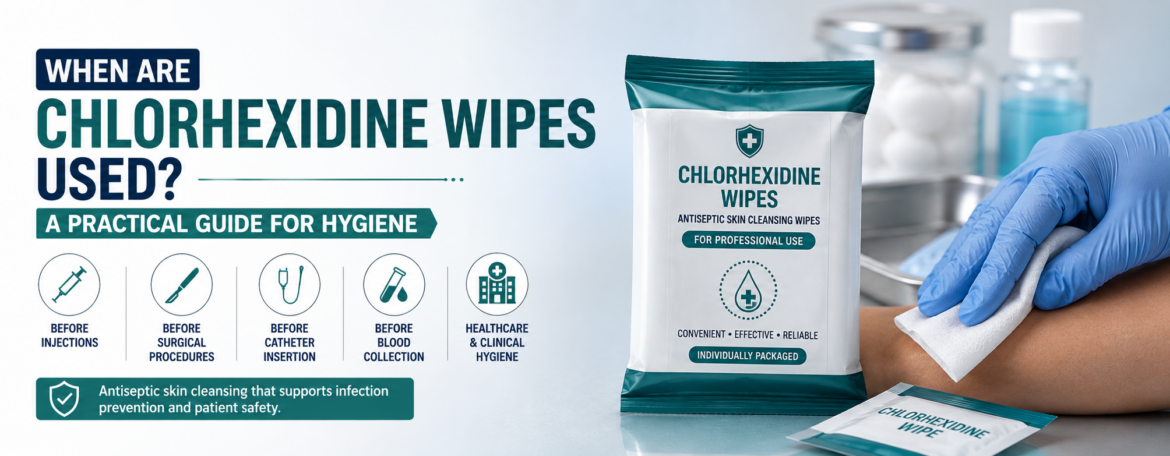
Chlorhexidine based wipes are primarily used when antiseptic skin cleansing is needed before procedures or when reducing microorganisms on the skin is important. They may be used for pre-injection preparation, surgical-site cleansing, catheter-related procedures, blood collection, and other healthcare applications, depending on the formulation, concentration, intended use, and healthcare protocol.
Maintaining proper hygiene is essential in healthcare environments, clinics, hospitals, laboratories, and other settings where reducing microorganisms on the skin is important. Among the products used for antiseptic skin preparation, chlorhexidine wipes are valued for their convenient application, controlled delivery, and ability to provide antiseptic cleansing without requiring separate cotton, gauze, or liquid application equipment.
Chlorhexidine, commonly referred to as CHG, is an antiseptic ingredient used in various healthcare products. When formulated appropriately, chlorhexidine-based wipes can help cleanse the skin before specific procedures and support infection-prevention protocols.
However, these wipes are not intended for every cleaning situation. Their appropriate use depends on the product formulation, concentration, intended application, patient considerations, and instructions provided by the manufacturer or healthcare facility.
What Are Chlorhexidine Wipes?
Chlorhexidine wipes are pre-moistened wipes containing a chlorhexidine-based antiseptic formulation. They are designed to provide convenient skin cleansing while delivering a measured amount of the active solution across the intended area.
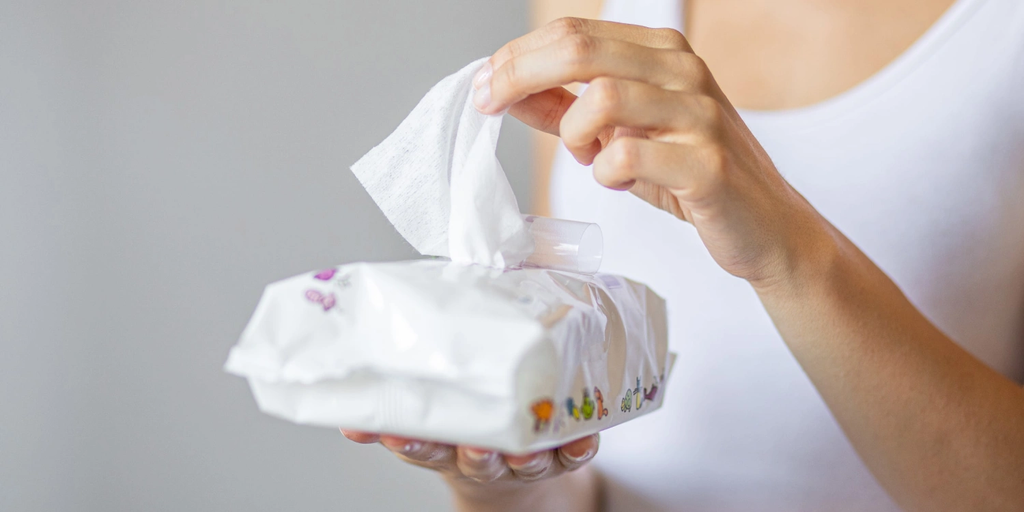
Unlike ordinary wet wipes, which are primarily designed for general cleansing, chlorhexidine wipes are formulated for antiseptic applications. Depending on the product, they may be supplied individually packaged to help maintain product integrity and simplify use in clinical environments.
The exact formulation can vary considerably. Some products contain chlorhexidine gluconate (CHG), while others may combine CHG with additional ingredients or use different concentrations and bases. Therefore, healthcare professionals should always follow the product label and applicable clinical protocols.
When Are Chlorhexidine Wipes Used?
1. Before Injections
One common application is preparing the skin before certain injections. Cleaning the intended injection area can help remove surface contaminants before the procedure.
The healthcare professional should select an appropriate antiseptic product and follow the recommended application and drying instructions.
2. Before Surgical Procedures
Antiseptic skin preparation is an important part of many surgical infection-prevention protocols. Chlorhexidine-based preparations may be used to cleanse designated areas before procedures when appropriate.
For surgical applications, the exact product and preparation technique should be determined according to the healthcare facility’s protocol and the product’s approved indications.
3. Before Catheter Insertion
Chlorhexidine-based antiseptic products can be used during certain catheter-related skin preparation procedures.
Because catheter insertion involves specific infection-prevention requirements, healthcare professionals should use only products suitable for the particular procedure and follow established clinical protocols.
4. Before Blood Collection
Skin antisepsis can also be relevant before blood collection procedures. An appropriate antiseptic wipe may provide a convenient method for preparing the designated skin area.
Proper contact time, application technique, and drying are important because simply wiping the skin quickly may not provide the same result as following the product’s instructions.
5. Healthcare and Clinical Hygiene
Chlorhexidine wipes may be useful in hospitals, clinics, diagnostic centers, and other healthcare environments where antiseptic skin preparation is required.
Their individually packaged format can also make them convenient for controlled, point-of-use applications.
Why Are Chlorhexidine Wipes Useful?
Convenient Application
Because the antiseptic solution is already incorporated into the wipe, healthcare professionals do not need to pour liquid antiseptic onto separate cotton or gauze for every application.
Controlled Delivery
Pre-moistened wipes can provide a consistent format for applying the formulation to the intended skin area, provided they are used according to the manufacturer’s directions.
Easy to Carry and Store
Individually packaged wipes are practical for procedure rooms, clinical kits, mobile healthcare environments, and other point-of-care applications.
Reduced Handling
A ready-to-use wipe can simplify the skin-preparation process and reduce the number of separate items required during routine procedures.
Suitable for Professional Applications
Depending on their formulation and regulatory status, chlorhexidine wipes can be developed for specific professional healthcare applications.
How Should Chlorhexidine Wipes Be Used?
Correct application is just as important as selecting the right antiseptic product. A general process may include:
- Check the product label – Confirm the intended use, formulation, concentration, and precautions.
- Inspect the packaging – Do not use a wipe if the package is damaged, leaking, or compromised.
- Prepare the skin area – Follow the relevant clinical procedure and remove visible contamination when required.
- Apply the wipe as directed – Cover the intended area using the recommended technique.
- Observe the required contact time – Some antiseptic products require a specific application or contact period.
- Allow the area to dry when instructed – Do not assume that immediately wiping or drying the area is appropriate for every product.
- Dispose of the used wipe properly – Follow healthcare waste-disposal procedures.
The manufacturer’s instructions should always take priority over generalized guidance.
Important Precautions
Chlorhexidine is an antiseptic, but it should not automatically be considered suitable for every body area or every person.
Important considerations include:
- Follow the product’s approved indications and directions.
- Avoid contact with the eyes unless the product is specifically designed for that use.
- Avoid contact with sensitive areas where the product is not indicated.
- Do not use on damaged or compromised skin unless specifically permitted by the product instructions.
- Keep chlorhexidine products away from children unless intended for supervised use.
- Check for known chlorhexidine sensitivity or allergy where relevant.
- Stop use and seek appropriate medical advice if significant irritation or an allergic reaction occurs.
- Healthcare facilities should follow their own infection-prevention protocols.
Important: Chlorhexidine formulations are not interchangeable. Concentration, vehicle, intended application, and regulatory labeling can differ between products.
Chlorhexidine Wipes vs. Ordinary Wet Wipes
The two products may look similar, but their purposes are different.
| Feature | Chlorhexidine Wipes | Ordinary Wet Wipes |
|---|---|---|
| Primary purpose | Antiseptic skin preparation | General cleansing |
| Active antiseptic | Chlorhexidine in applicable formulations | Usually absent or different |
| Typical environment | Healthcare/professional applications | Personal, household, or general use |
| Procedure preparation | May be appropriate when indicated | Generally not a substitute for an antiseptic |
| Usage | Follow specific product instructions | Follow product instructions |
This distinction is important because a general cleansing wipe should not automatically be considered an alternative to an antiseptic product.
What Makes a Good Chlorhexidine Wipe?
For professional use, product quality involves more than simply including chlorhexidine in the formulation. Important considerations can include:
- Appropriate chlorhexidine concentration
- Suitable wipe substrate
- Uniform liquid distribution
- Consistent wetness
- Effective packaging
- Product stability
- Appropriate skin compatibility testing
- Clear labeling and instructions
- Suitable manufacturing controls
- Appropriate regulatory compliance
- Reliable batch-to-batch consistency
For organizations purchasing wipes in bulk, evaluating the manufacturer’s quality systems and documentation can be just as important as evaluating the wipe itself.
Choosing Chlorhexidine Wipes for Professional Use
Businesses and healthcare organizations should consider several factors before selecting a product.
Intended Application
First, determine exactly how the wipe will be used. A product designed for general skin cleansing may have different specifications from one intended for pre-procedure antisepsis.
Formulation
Review the active ingredient, concentration, solvent system, and other formulation characteristics to ensure they correspond to the intended application.
Packaging
Individual sachets can be useful where hygiene, portability, and controlled dispensing are priorities.
Wipe Material
The substrate should be compatible with the formulation and provide suitable coverage without excessive dripping or insufficient wetness.
Manufacturing Quality
For bulk procurement, evaluate manufacturing standards, quality-control processes, consistency, documentation, and applicable certifications or regulatory requirements.
Customization
OEM and private-label buyers may require customized packaging, wipe dimensions, formulation specifications, branding, or pack configurations. These requirements should be discussed with the manufacturer before production.
Common Mistakes to Avoid
Several mistakes can reduce the effectiveness or safety of antiseptic skin preparation:
Using the wrong product: A general-purpose wipe is not necessarily suitable for antiseptic preparation.
Ignoring contact time: Antiseptic products may require specific application or contact times. Always follow the label.
Using damaged packaging: Compromised packaging may affect product quality and hygiene.
Applying to unsuitable areas: Chlorhexidine products can have important site-specific precautions.
Assuming every CHG wipe is identical: Concentration and formulation can vary substantially between products.
Reusing wipes: Single-use products should not be reused.
Frequently Asked Questions
1. What are chlorhexidine wipes mainly used for?
They are mainly used for antiseptic skin cleansing and preparation when reducing microorganisms on the skin is part of an appropriate healthcare procedure.
2. Can chlorhexidine wipes be used before injections?
Some chlorhexidine wipes may be indicated for skin preparation before injections. Always verify the product label and follow the relevant clinical protocol.
3. Are chlorhexidine wipes the same as regular wet wipes?
No. Regular wet wipes are generally designed for cleansing, while chlorhexidine wipes contain an antiseptic formulation intended for specific applications.
4. Can chlorhexidine wipes be used on the face?
Not automatically. The face, eyes, ears, and other sensitive areas may have specific restrictions. Only use a product on these areas when its labeling specifically permits it.
5. Are chlorhexidine wipes safe for everyone?
Not necessarily. Product suitability depends on the formulation, intended use, skin condition, and individual sensitivity. Known chlorhexidine allergies or sensitivities should be taken seriously.
6. Can chlorhexidine wipes replace handwashing?
No. They should not automatically be considered a replacement for proper handwashing or an appropriate alcohol-based hand sanitizer when those methods are indicated.
7. How should chlorhexidine wipes be stored?
Follow the manufacturer’s storage instructions. Generally, they should remain sealed in their original packaging and be protected from unsuitable temperatures, contamination, and package damage.
8. Why are individually packed chlorhexidine wipes useful?
Individual packaging can support convenient point-of-use application, portability, controlled dispensing, and hygienic handling.
9. What should hospitals consider when buying chlorhexidine wipes?
Hospitals should consider the intended clinical application, formulation, concentration, wipe substrate, packaging, quality controls, documentation, regulatory requirements, and supplier reliability.
10. Can chlorhexidine wipes be customized for OEM requirements?
Depending on the manufacturer, OEM customization may include formulation specifications, wipe dimensions, packaging format, labeling, branding, and pack sizes. Requirements should be confirmed with the manufacturer.
Conclusion
Chlorhexidine wipes can be a practical option for antiseptic skin preparation in healthcare environments when the specific formulation is appropriate for the intended application. Their ready-to-use format, convenient packaging, and controlled application make them useful for procedures such as pre-injection preparation, catheter-related skin preparation, blood collection, and selected surgical applications.
However, choosing the correct product is essential. Concentration, formulation, intended use, skin compatibility, packaging, and regulatory requirements should all be considered. Most importantly, chlorhexidine wipes should always be used according to the manufacturer’s instructions and applicable healthcare protocols.
For organizations seeking dependable chlorhexidine-based wipes for professional or OEM requirements, selecting an experienced manufacturer with appropriate quality-control processes can help ensure consistent product performance and supply.
Looking for reliable Chlorhexidine Based Wipes for bulk, OEM, or private-label requirements? Contact ICLA to discuss your product specifications, packaging requirements, and manufacturing needs.