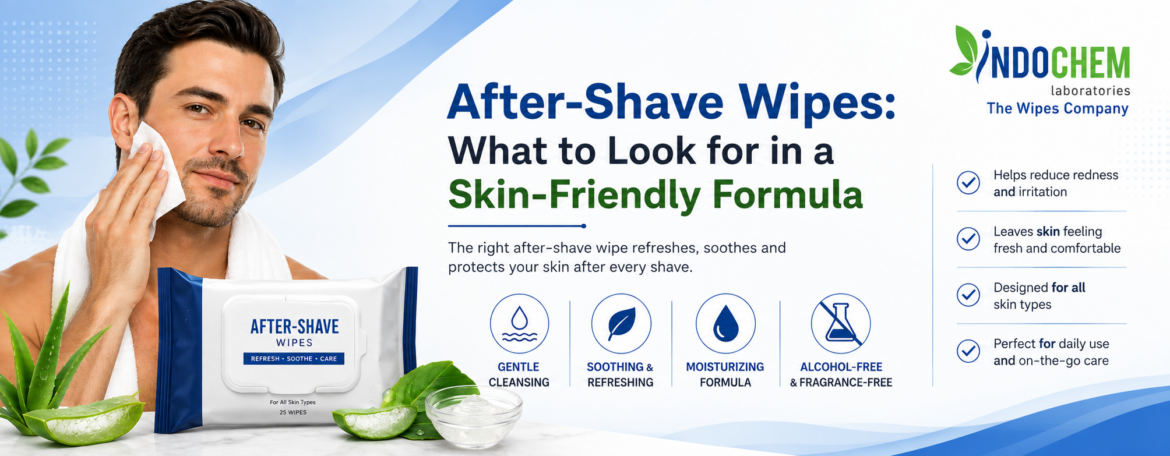
A skin-friendly after-shave wipe Manfacturer who manufactured this wipe should gently refresh freshly shaved skin without causing unnecessary dryness or irritation. Look for a soft, non-abrasive wipe with a fragrance-free, alcohol-free or low-irritant formula containing moisturizing and soothing ingredients such as glycerin, aloe vera, panthenol or suitable humectants. Always consider your skin type and check the complete ingredient list before use.
Shaving removes unwanted hair, but it also creates friction and can leave the skin temporarily sensitive. Razor burn, redness, dryness, tightness, small nicks and razor bumps are common concerns after shaving. The right after-shave care can therefore make an important difference to how comfortable the skin feels.
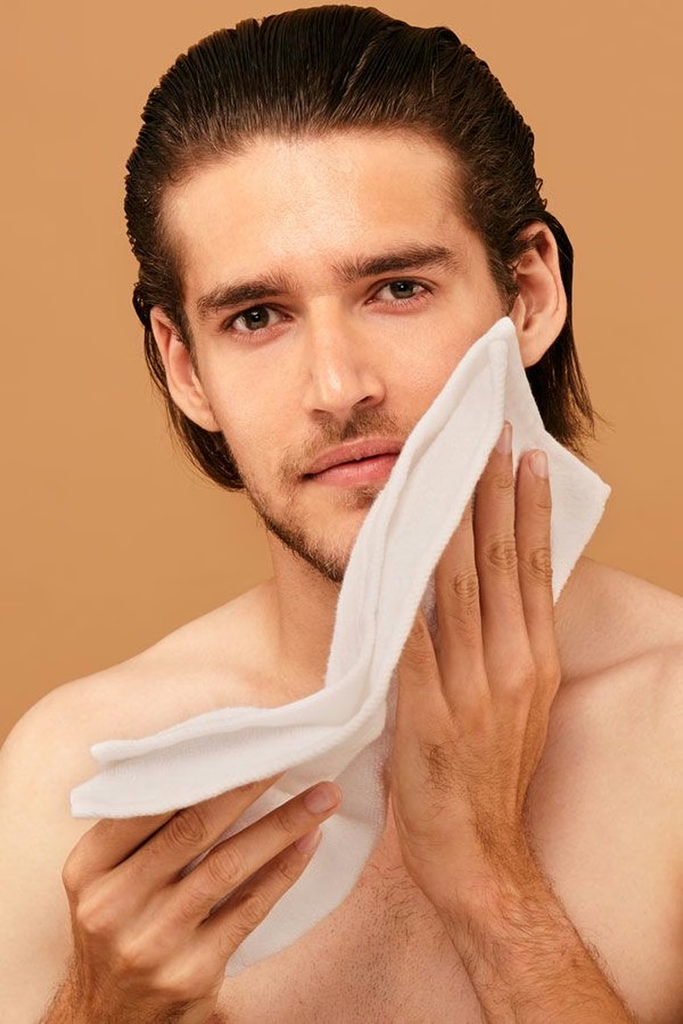
After-shave wipes offer a convenient way to clean and refresh the skin immediately after shaving. They can be particularly useful when a quick grooming routine is needed at home, while travelling, at salons, in barber shops or as part of personal-care kits. However, not every wipe is appropriate for freshly shaved skin.
A good after-shave wipe should focus on gentle cleansing, comfort and skin conditioning rather than simply providing a strong fragrance or intense cooling sensation. Dermatologists also recommend choosing suitable products according to skin type and using gentle shaving techniques to reduce irritation.
Why Does Skin Need Special Care After Shaving?
During shaving, the razor passes repeatedly across the skin surface. Even when there are no visible cuts, this mechanical action can cause temporary irritation and make the skin feel dry or sensitive.
Shaving against the direction of hair growth, applying excessive pressure or using a dull blade can increase the likelihood of razor bumps and irritation. The American Academy of Dermatology recommends shaving in the direction of hair growth and using moisturizing shaving products to help reduce irritation.
This is why an after-shave wipe should be designed for gentle post-shaving use, rather than functioning like a harsh cleanser.
What to Look for in a Skin-Friendly After-Shave Wipe
1. A Soft and Non-Abrasive Wipe Substrate
The physical material of the wipe matters just as much as its liquid formulation.
A freshly shaved area may be more sensitive to rubbing, so the wipe should have a soft texture and should not require aggressive wiping. A suitable substrate can help distribute the formulation evenly while minimizing unnecessary friction.
For facial applications, a smooth, soft and sufficiently durable wipe is generally preferable to a rough material.
2. Fragrance-Free or Low-Fragrance Formulation
Fragrance may make a wipe smell pleasant, but it is not necessary for effective post-shave care. For sensitive or reactive skin, fragrance-free products can be a better choice.
The American Academy of Dermatology recommends mild, fragrance-free products for sensitive skin because fragrances can contribute to irritation and dryness. It also points out that “unscented” does not necessarily mean fragrance-free because masking fragrances may still be present.
When evaluating an after-shave wipe, therefore, “fragrance-free” is a more useful label than simply “unscented.”
3. Gentle Moisturizing Ingredients
Shaving can leave skin feeling tight or dry. Humectants and skin-conditioning ingredients can help create a more comfortable after-shave experience.
Depending on the intended formulation, ingredients such as:
- Glycerin
- Hyaluronic acid
- Panthenol
- Aloe vera
- Suitable skin-conditioning agents
- Ceramides in appropriate formulations
may be considered.
Moisturizing ingredients are particularly relevant for dry or sensitive skin because maintaining hydration supports the skin barrier. Dermatologists commonly recommend ingredients such as glycerin, hyaluronic acid and ceramides in moisturizing products.
4. Avoid Unnecessarily Harsh Ingredients
A strong burning or stinging sensation should not automatically be interpreted as proof that a product is working.
Traditional alcohol-heavy aftershaves can provide a strong cooling or astringent sensation, but alcohol may contribute to dryness or stinging, particularly for sensitive skin. Fragrance and certain botanical or essential-oil ingredients can also irritate some individuals.
For a skin-friendly wipe, formulators should carefully evaluate the purpose and concentration of every ingredient rather than adding ingredients simply for a strong sensory effect.
5. Skin-Friendly pH
The formulation’s pH can also influence skin comfort. A properly developed cosmetic wipe should be formulated with the intended application area and skin compatibility in mind.
Rather than assuming that a particular pH is ideal for everyone, manufacturers should validate the finished formulation through appropriate stability, compatibility and safety testing.
6. Suitable Preservative System
Because wipes contain moisture, their formulations require appropriate protection against microbial contamination and spoilage.
The FDA notes that disposable wipes can contain preservatives to prevent the growth of bacteria and molds. Proper storage and packaging are also important because temperature extremes can affect the formulation and preservative system.
A professional after-shave wipe should therefore be evaluated as a complete formulation, including its preservative system, packaging and shelf-life stability.
7. Appropriate Packaging
Packaging plays a major role in maintaining wipe quality.
Individual sachets can be useful for:
- Travel grooming kits
- Hotel amenities
- Barber and salon applications
- Personal-care kits
- Promotional samples
- On-the-go grooming
Resealable packs may be suitable for consumers who need multiple wipes, provided the packaging protects the remaining wipes from drying and contamination.
The FDA recommends keeping wipe containers tightly closed and following storage instructions to help maintain product quality.
Ingredients That May Support a Gentle Formula
A well-designed after-shave wipe does not necessarily need a long ingredient list. In many cases, a straightforward formulation can be easier to evaluate and may be more suitable for sensitive users.
Glycerin
Glycerin is a widely used humectant that helps attract and retain water, making it useful in moisturizing formulations.
Aloe Vera
Aloe vera is commonly incorporated into soothing personal-care formulations. It may provide a pleasant cooling and conditioning experience, although individual responses can vary.
Panthenol
Panthenol is frequently used in cosmetic formulations for its conditioning and moisturizing properties and can be considered when developing a skin-comfort-focused wipe.
Hyaluronic Acid
Hyaluronic acid is a humectant used in many skincare products to support hydration. Its suitability depends on the overall formulation and intended product positioning.
Ceramides
Ceramides are skin-identical lipids commonly used in barrier-supporting skincare products. They may be more practical in certain lotion, cream or serum formats, depending on the wipe formulation.
Ingredients and Features to Evaluate Carefully
When selecting or developing after-shave wipes, pay particular attention to:
- Strong fragrance
- High levels of drying alcohols
- Strong cooling agents
- Potentially irritating essential oils
- Ingredients that the target customer is known to avoid
- Excessive exfoliating actives
- Poorly balanced formulations
- Rough or abrasive wipe substrates
“Natural” does not automatically mean “gentle.” Plant extracts and essential oils can still cause irritation in susceptible individuals.
How to Choose After-Shave Wipes for Different Skin Types
Sensitive Skin
Choose a simple, fragrance-free formula with gentle cleansing and moisturizing properties. Avoid unnecessarily strong fragrances and irritating ingredients.
Dry Skin
Prioritize hydration and skin conditioning. Ingredients such as glycerin, hyaluronic acid and suitable emollients may be useful.
Oily or Acne-Prone Skin
Look for lightweight, non-comedogenic formulations where appropriate. Avoid overly heavy or greasy residues.
Normal Skin
A mild cleansing and moisturizing formula may provide convenient everyday post-shave care.
Remember that individual skin responses differ. If a new product causes persistent burning, redness, itching or a rash, discontinue use and seek professional medical advice when appropriate. The FDA advises consumers to check ingredient lists and stop using wipes if irritation or other adverse reactions occur.
How to Use After-Shave Wipes Properly
- Complete shaving using a clean, suitable razor.
- Rinse away remaining shaving product.
- Gently pat the skin rather than aggressively rubbing it.
- Take one after-shave wipe from its packaging.
- Gently wipe the shaved area.
- Allow the skin to dry naturally if the product directions recommend it.
- Follow with a suitable moisturizer when additional hydration is needed.
- Dispose of the used wipe properly.
For people who frequently experience razor bumps, improving shaving technique is equally important. Dermatologists recommend softening the hair before shaving, using moisturizing shaving cream and shaving in the direction of hair growth.
Why Product Testing Matters
A product can look excellent on paper but still perform differently once the complete formulation, wipe substrate and packaging are combined.
Professional development should consider:
- Skin compatibility
- Stability
- Microbiological quality
- Preservative effectiveness where applicable
- Wipe-to-liquid compatibility
- Packaging compatibility
- Moisture retention
- Product shelf life
- User experience
- Appropriate labeling and directions
These factors help create a more consistent and reliable product rather than focusing only on individual ingredients.
After-Shave Wipes for OEM and Private-Label Development
Brands looking to develop after-shave wipes should consider more than the fragrance and packaging design. The formulation, wipe material, packaging format and intended market should work together.
An OEM/private-label manufacturer can help businesses evaluate options such as:
- Wipe substrate selection
- Liquid formulation
- Fragrance-free or customized formulations
- Individual sachets or multipack packaging
- Skin-care ingredients
- Product positioning
- Bulk production requirements
- Packaging customization
The final product should be developed according to the target consumer, intended application and applicable cosmetic-product requirements.
The best after-shave wipe is not necessarily the one with the strongest fragrance, strongest cooling effect or longest ingredient list. A skin-friendly formula should prioritize gentleness, comfort, appropriate hydration and compatibility with freshly shaved skin.
Look for a soft wipe substrate, fragrance-free or low-irritant formulation, suitable moisturizing ingredients and carefully selected preservatives. Just as importantly, consider packaging, stability and proper product testing.
For people with sensitive skin, a simple formulation can be a better starting point than a highly fragranced or aggressively cooling product. And if shaving repeatedly causes significant irritation, razor bumps or persistent skin problems, changing shaving technique and consulting a dermatologist may be more appropriate than simply changing wipes.
Frequently Asked Questions
1. What are after-shave wipes used for?
After-shave wipes are designed to conveniently refresh and cleanse skin after shaving. Depending on their formulation, they may also provide moisturizing, conditioning or soothing benefits.
2. Are after-shave wipes suitable for sensitive skin?
They can be, provided the formulation and wipe material are appropriate. Sensitive-skin users should generally look for gentle, fragrance-free products and check the ingredient list before use.
3. Should after-shave wipes contain alcohol?
Not necessarily. Alcohol can provide a cooling or astringent sensation, but some alcohol-containing formulas may increase dryness or stinging. The best choice depends on the formulation and the user’s skin sensitivity.
4. What ingredients are good in after-shave wipes?
Depending on the product design, glycerin, hyaluronic acid, panthenol, aloe vera and suitable skin-conditioning ingredients may support a moisturizing and comfortable formula.
5. Are fragrance-free wipes better after shaving?
For sensitive or easily irritated skin, fragrance-free products are generally a sensible choice. Dermatologists specifically recommend fragrance-free products for sensitive skin.
6. Can after-shave wipes prevent razor bumps?
They may support post-shave comfort, but wipes alone cannot guarantee prevention of razor bumps. Shaving technique is important. Shaving in the direction of hair growth and using suitable moisturizing shaving products can help reduce irritation and bumps.
7. Can after-shave wipes be used every day?
If the product is specifically formulated for regular post-shave use and does not cause irritation, it may be incorporated into a daily grooming routine. Always follow the product’s directions.
8. Can after-shave wipes be used on broken skin?
Do not assume that a cosmetic wipe is appropriate for cuts, open wounds or significantly irritated skin. Follow the product label; the FDA advises using wipes only on intact skin unless the product specifically indicates otherwise.
9. What should I do if an after-shave wipe causes burning or a rash?
Stop using the product and review its ingredients. Persistent or severe irritation should be discussed with a healthcare professional. The FDA advises stopping use and contacting a healthcare provider when a wipe causes a rash, redness, irritation or burning.
10. What makes a good OEM after-shave wipe?
A strong OEM product combines an appropriate wipe substrate, well-designed liquid formulation, suitable packaging, stability, microbiological quality and consistent manufacturing. The formulation should also be matched to the intended consumer and market.