
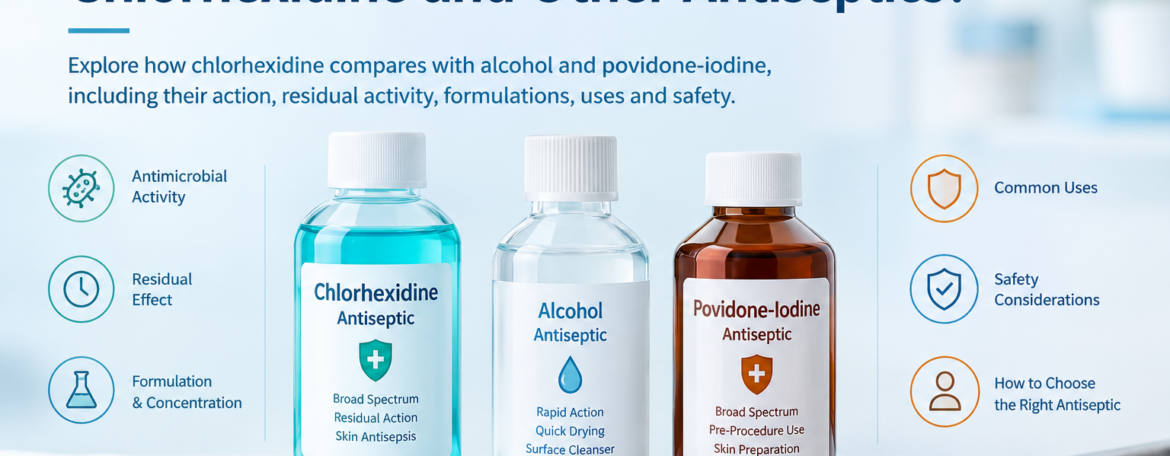
Chlorhexidine based wipes is a widely used antiseptic known for broad antimicrobial activity and persistent action on the skin. Unlike alcohol, which acts rapidly but has little residual activity, chlorhexidine can continue suppressing microbial growth after application. Povidone-iodine is another broad-spectrum option, but its activity and persistence differ from chlorhexidine depending on the formulation and application.
Antiseptics play an important role in reducing microorganisms on the skin before certain medical procedures and during routine skin preparation. However, not all antiseptics work in exactly the same way. Alcohols, chlorhexidine, and iodine-based preparations have different chemical properties, antimicrobial activity, persistence, and application considerations.
Understanding these differences is useful when selecting an appropriate antiseptic for a particular situation. The choice should not be based only on which ingredient sounds stronger. Formulation, concentration, intended use, skin condition, anatomical location, patient age, and potential sensitivities can all affect suitability.
What Is Chlorhexidine?
Chlorhexidine is an antiseptic commonly used for reducing microorganisms on the skin. It is available in different formulations and concentrations, including aqueous and alcohol-containing preparations.
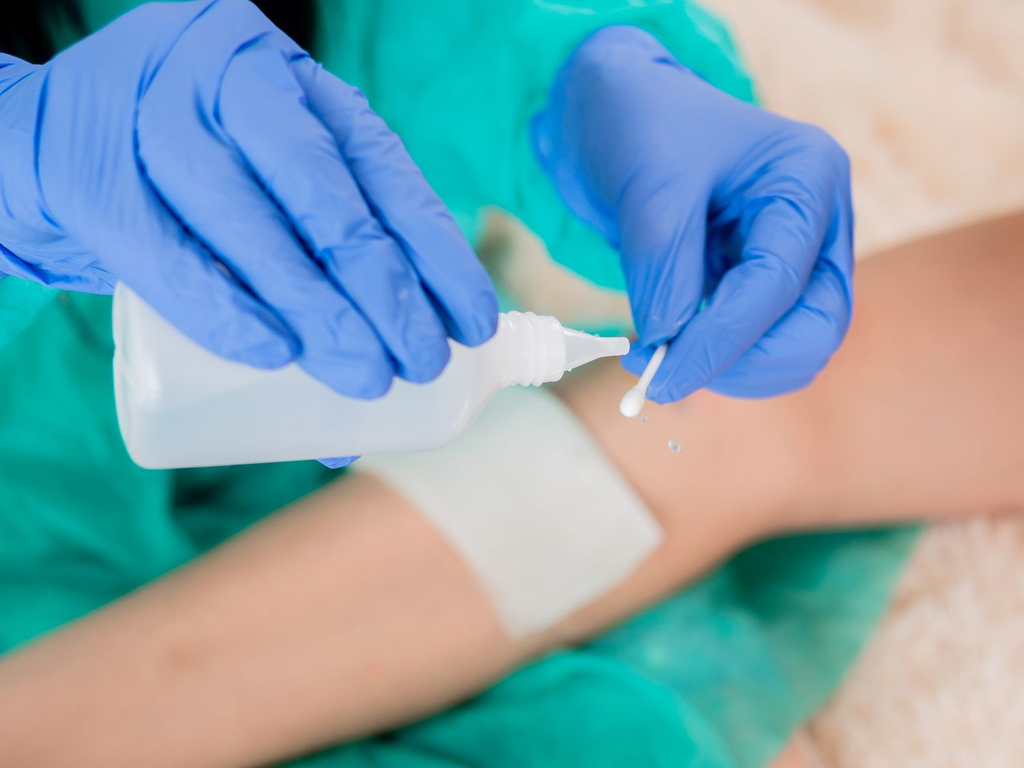
One of its important characteristics is residual activity. This means that chlorhexidine can continue exerting antimicrobial effects on the skin after application, although the degree of persistence depends on the formulation and conditions of use.
Chlorhexidine is particularly important in healthcare settings where skin antisepsis is required before certain procedures. For example, CDC recommendations identify chlorhexidine preparations with alcohol as an option for specific catheter-related skin-preparation procedures, while alternatives may be used when chlorhexidine is contraindicated.
How Does Chlorhexidine Work?
Chlorhexidine interacts with microbial cell membranes and can disrupt their structure, ultimately contributing to microbial death or inhibition.
Its activity covers many commonly encountered bacteria, although its effectiveness varies among microorganisms. The formulation also matters considerably. Chlorhexidine combined with alcohol, for example, has different characteristics from an aqueous chlorhexidine preparation.
This is why it is more accurate to discuss an antiseptic formulation rather than assuming that every product containing the same active ingredient will perform identically.
Chlorhexidine vs Alcohol
Alcohol-based antiseptics, particularly preparations containing ethanol or isopropyl alcohol, are known for rapid antimicrobial action.
One major difference is persistence.
Alcohol acts quickly but generally has little residual activity once it evaporates. Chlorhexidine, in contrast, can remain associated with the skin and provide continuing antimicrobial activity.
This difference can be important in situations where prolonged reduction of microorganisms is desirable.
Research has also shown that the combination of chlorhexidine and alcohol can have advantages over aqueous formulations in certain clinical applications. A recent systematic review of catheter-related infection studies found lower infection rates associated with alcohol-based formulations compared with aqueous formulations, although the exact results depend on the antiseptic, concentration, and clinical setting.
Chlorhexidine vs Povidone-Iodine
Povidone-iodine is another widely used skin antiseptic. It works by releasing iodine, which has broad antimicrobial activity.
The key differences between chlorhexidine and povidone-iodine include:

- Active ingredient: Chlorhexidine and povidone-iodine use different antimicrobial mechanisms.
- Persistence: Chlorhexidine generally provides greater residual activity on the skin.
- Formulation: Both can be prepared in aqueous or alcohol-containing formulations.
- Application: The appropriate choice depends on the procedure, anatomical site, formulation, and patient factors.
- Clinical evidence: Studies comparing them can produce different results depending on whether alcohol is included and which clinical outcome is being measured.
Recent evidence illustrates why the formulation must be considered. A 2026 meta-analysis found that chlorhexidine in alcohol was associated with lower surgical-site-infection risk than aqueous povidone-iodine in the included adult surgical trials. However, the authors noted that comparative effectiveness against alcohol-based povidone-iodine remains less certain.
Therefore, it would be misleading to treat “chlorhexidine” and “povidone-iodine” as single, uniform categories without considering the actual formulation.
Chlorhexidine vs Other Antiseptics
Other antiseptic ingredients may also be used depending on the intended application. Their effectiveness can differ according to the microorganism involved, concentration, contact time, formulation, and environmental conditions.
For example, alcohol can provide rapid microbial reduction, while chlorhexidine offers both rapid activity in suitable formulations and residual effects. Iodine-based preparations have broad antimicrobial activity but generally have less persistent activity than chlorhexidine.
The practical choice therefore involves balancing several factors rather than simply choosing the antiseptic with the broadest reputation.
Why Formulation Matters
The active ingredient is only one part of an antiseptic’s performance.
Other factors can include:
1. Concentration
Different concentrations can produce different antimicrobial effects and tolerability. Higher concentration does not automatically mean that a preparation is appropriate for every application.
2. Presence of Alcohol
Alcohol can provide rapid antimicrobial activity and may enhance the overall performance of some antiseptic formulations.
3. Contact Time
An antiseptic generally needs sufficient contact with the skin to work as intended. Instructions provided for the specific formulation should be followed.
4. Drying Time
Allowing an antiseptic to dry properly can be important for both effectiveness and safety. CDC guidance specifically recommends allowing antiseptics to dry according to the manufacturer’s instructions before catheter placement.
5. Intended Application Site
An antiseptic suitable for intact external skin may not be appropriate for mucous membranes, eyes, ears, or other sensitive areas. Product labeling and clinical guidance should therefore be followed carefully.
Where Are Chlorhexidine-Based Preparations Commonly Used?
Chlorhexidine-containing preparations are used in a variety of healthcare-related skin-preparation situations. Examples can include preparation before certain invasive procedures, catheter insertion, and other clinical applications where reducing skin microorganisms is important.
Products such as Chlorhexidine based wipes can provide a convenient format for situations where controlled application to an intended skin area is required. However, suitability depends on the specific formulation, concentration, intended use, and product instructions.
The use of any antiseptic should be consistent with its labeling and applicable clinical protocols.
Are Chlorhexidine and Alcohol the Same?
No. Although they can be combined in a single formulation, chlorhexidine and alcohol are different antiseptic agents.
Alcohol generally provides rapid antimicrobial action but evaporates relatively quickly. Chlorhexidine can provide residual antimicrobial activity on the skin.
When combined, the two ingredients can provide complementary characteristics. However, the performance of a particular product depends on its exact formulation, concentration, and intended application.
Are Chlorhexidine and Povidone-Iodine Interchangeable?
Not necessarily.
Both can be used for skin antisepsis, but they have different chemical properties and application considerations. In some clinical situations, guidelines may favor one option, while another may be appropriate when there is a contraindication or specific procedural consideration.
For example, CDC guidance recommends chlorhexidine preparation with alcohol for certain catheter-related applications but identifies iodine-based or 70% alcohol alternatives when chlorhexidine cannot be used.
Therefore, interchangeability should be determined according to the specific application rather than assumed.
Safety Considerations
Antiseptics are intended for specific applications and should be used according to their labeling and professional guidance.
Important considerations include:
- Avoiding contact with the eyes unless the product is specifically intended for that use.
- Following the recommended concentration and application method.
- Allowing alcohol-containing preparations to dry appropriately.
- Considering known allergies or hypersensitivity.
- Avoiding inappropriate application to sensitive anatomical areas.
- Following healthcare-facility protocols for clinical procedures.
Chlorhexidine can rarely cause serious hypersensitivity reactions, while alcohol-containing preparations also require appropriate handling and drying, particularly around procedures involving ignition sources. Recent evidence reviews emphasize the importance of considering both efficacy and safety when comparing antiseptic preparations.
How Should You Choose Between Different Antiseptics?
There is no universal antiseptic that is automatically appropriate for every situation.
Consider:
- The intended application
- The anatomical site
- The required antimicrobial activity
- Whether residual activity is desirable
- The formulation and concentration
- Patient age and specific circumstances
- Known sensitivities or contraindications
- Applicable clinical guidelines
- Manufacturer instructions
For healthcare procedures, the decision should follow relevant professional guidelines and institutional protocols rather than relying solely on general comparisons.
Chlorhexidine, alcohol, and povidone-iodine are all important antiseptic options, but they differ in mechanism, speed of action, residual activity, formulation, and appropriate applications. Chlorhexidine is particularly recognized for its persistent antimicrobial activity, while alcohol offers rapid action and iodine-based preparations provide another broad-spectrum option.
The most meaningful comparison is therefore not simply “which antiseptic is strongest?” but which formulation is appropriate for the specific application, patient, and clinical setting.
When evaluating products such as Chlorhexidine based wipes, attention should be given to the active ingredient, concentration, formulation, intended use, safety instructions, and applicable clinical guidance rather than the ingredient name alone.
Frequently Asked Questions
1. What is the main difference between chlorhexidine and alcohol?
Alcohol generally provides rapid antimicrobial activity but has limited residual activity after evaporation. Chlorhexidine can provide longer-lasting antimicrobial effects on the skin.
2. Is chlorhexidine stronger than povidone-iodine?
The answer depends on the formulation and application. Clinical evidence varies according to whether the preparations contain alcohol, their concentrations, and the procedure being studied. Therefore, the two should not be compared without considering these factors.
3. Does chlorhexidine remain active on the skin?
Yes. One of chlorhexidine’s notable properties is residual antimicrobial activity, although the extent depends on the formulation and conditions of application.
4. Can chlorhexidine be used for every type of skin preparation?
No. Its suitability depends on the anatomical site, formulation, patient factors, intended use, and product instructions. Certain applications may require alternative antiseptics.
5. Why is alcohol sometimes combined with chlorhexidine?
Alcohol can provide rapid antimicrobial activity, while chlorhexidine contributes residual activity. Combining them can therefore provide complementary antimicrobial properties in suitable formulations.
6. Does chlorhexidine work against all microorganisms?
No antiseptic should be assumed to be equally effective against every microorganism. Activity varies depending on the organism and the formulation, concentration, and exposure conditions.
7. Are chlorhexidine wipes suitable for medical procedures?
Some specifically formulated products may be intended for particular medical skin-preparation applications. However, suitability depends on the product’s labeling, formulation, concentration, intended use, and applicable clinical protocols.
8. Should an antiseptic be allowed to dry before a procedure?
For certain clinical procedures, yes. CDC guidance recommends allowing antiseptics to dry according to the manufacturer’s instructions before catheter placement.
9. What factors should be considered when selecting an antiseptic?
Consider the intended use, anatomical site, formulation, concentration, antimicrobial characteristics, residual activity, patient factors, contraindications, and relevant clinical guidelines.
10. Is chlorhexidine better than every other antiseptic?
No single antiseptic is universally appropriate for every situation. The appropriate choice depends on the clinical setting, formulation, patient considerations, and intended application.